Residential
Fixings
Every sail we put up is held by a handful of stainless fittings and whatever we can bolt them to. These are the ones we use on Perth homes.
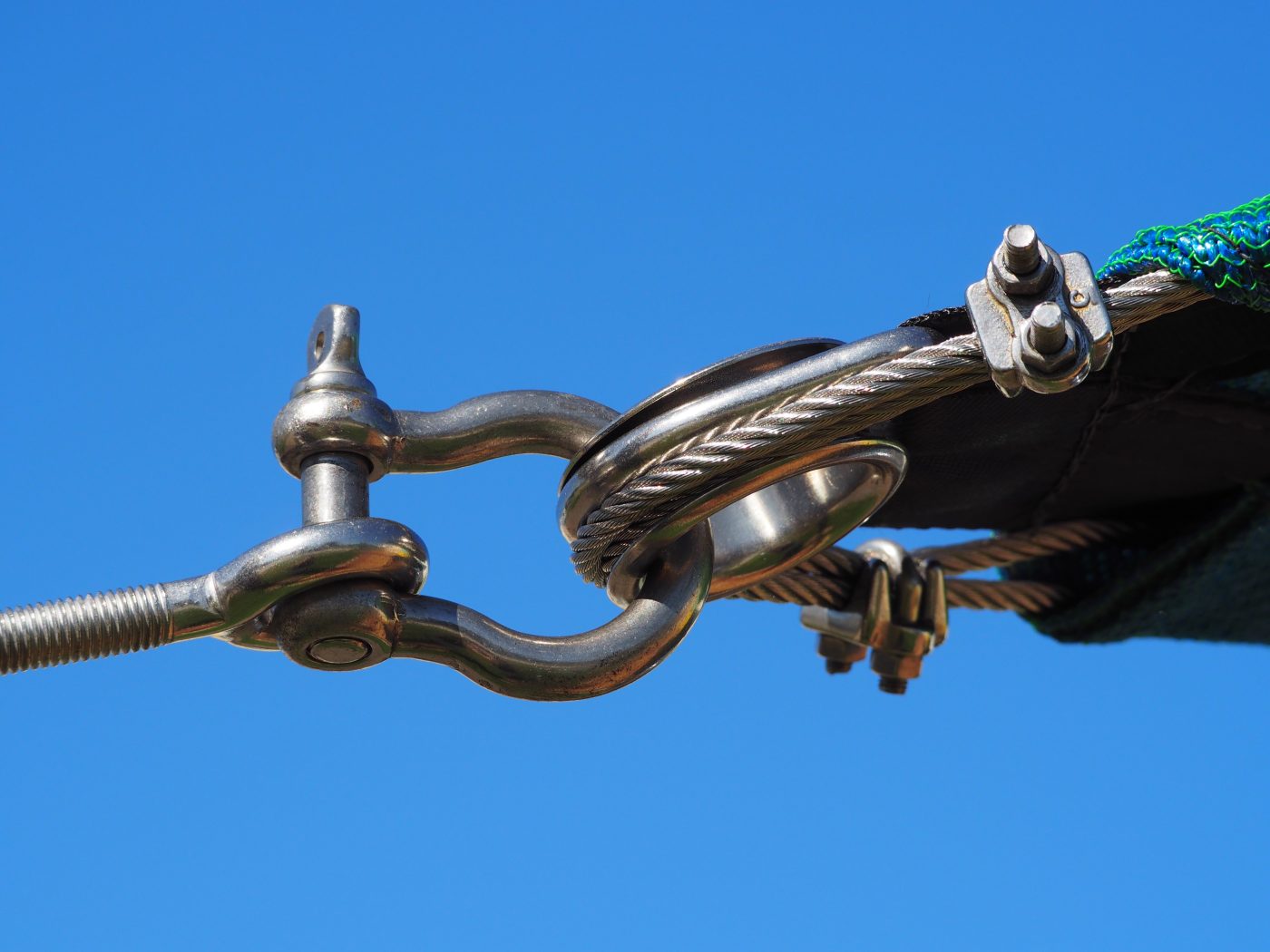
The hardware
Why we spend money on the fittings.
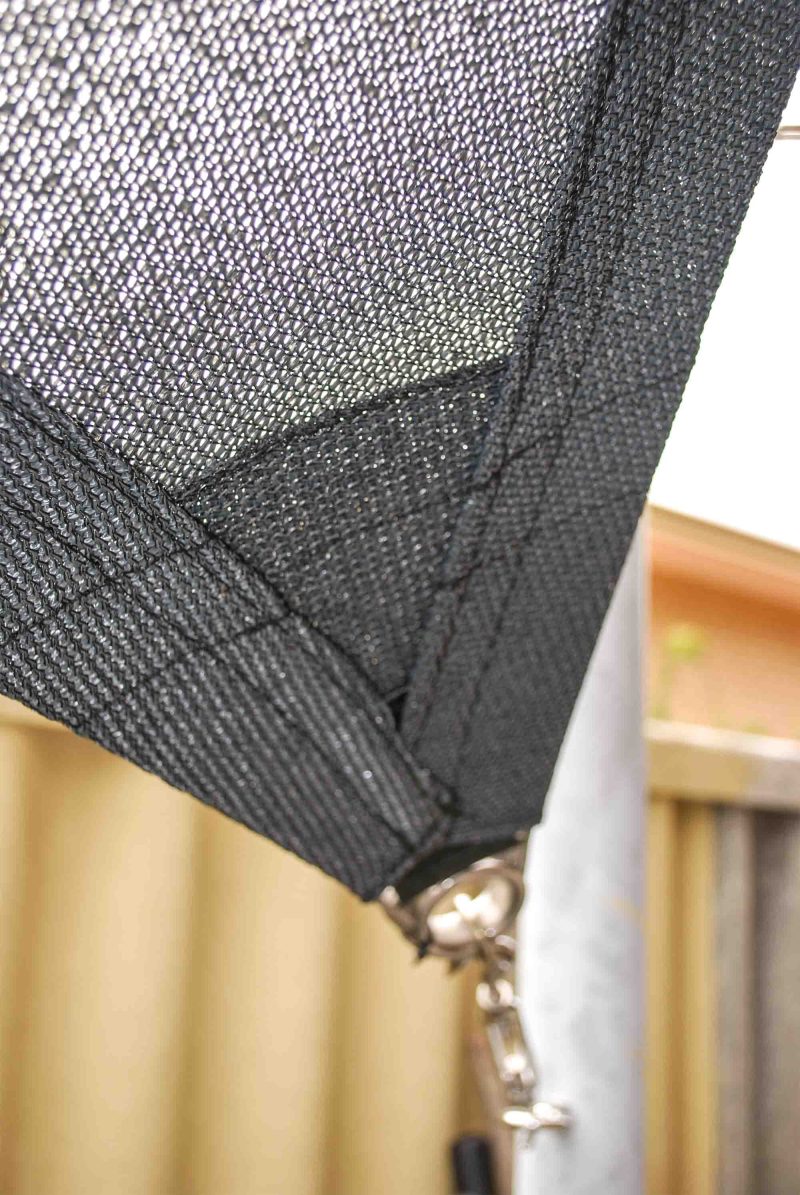
When an old sail fails it is usually at a corner or a fixing point, not in the middle of the fabric. That is the part we do not skimp on, whether it is a back patio or a school.
-
316 stainless hardware
The shackles, turnbuckles, thimbles and wire rope grips we install are 316 grade. Lesser fittings rust in Perth air and leave brown streaks down a rendered wall.
-
Plates sized for the pull
A sail corner pulls hard. The plate or bracket is picked so that load goes into rafters, battens or masonry instead of one screw in a sheet of roofing.
-
Everything stays adjustable
There is a turnbuckle on every corner, so a sail that has stretched can be wound back up to tension without coming down.
-
Matched to what you have
Tile, Colorbond, limestone, double brick, an existing patio, or nothing useful at all. Each one gets a different fixing, worked out on site before we drill.
On site
How we work out a fixing point.
The same four things happen at every corner before a sail is made.
-
01 Find the structure
We work out what sits behind the surface. Roof sheeting hides the rafters and battens, and a fascia board on its own will not hold a sail.
- Roof sheeting and tile profiles
- Rafter and batten spacing
- Brick, double brick and limestone
- Existing patios and pergolas
-
02 Size the fixing to the load
Each corner pulls in its own direction with its own force. The plate, bracket or post is picked for that pull.
- Corner loads and sail geometry
- Plate size and fixing pattern
- Post and footing where one is needed
-
03 Fix into something solid
On a metal roof that means a profiled plate spanning several ribs. In masonry it means an anchor set into the brick rather than the mortar joint.
- Profiled roof plates across the ribs
- Rafter and fascia brackets
- Wall plates, pad eyes and eye bolts
- Freestanding posts where there is nothing to pull against
-
04 Tension and check
Turnbuckles bring the sail up evenly. We check every point under load before we leave, and the hardware stays adjustable afterwards.
- Even tension across all corners
- Every fitting checked under load
- Still adjustable years later
On the job
Fixings on jobs around Perth.
These are all from jobs of ours. Some of this hardware we sell over the counter, and some of it is made up for the particular job and is not something we list online.
-
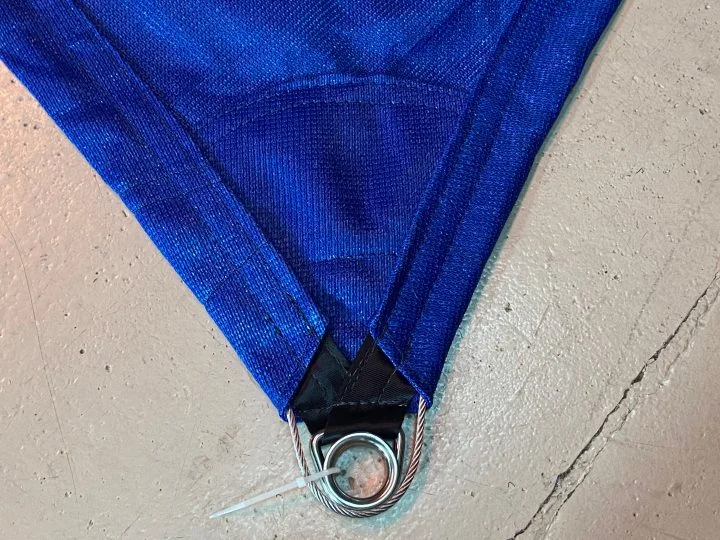
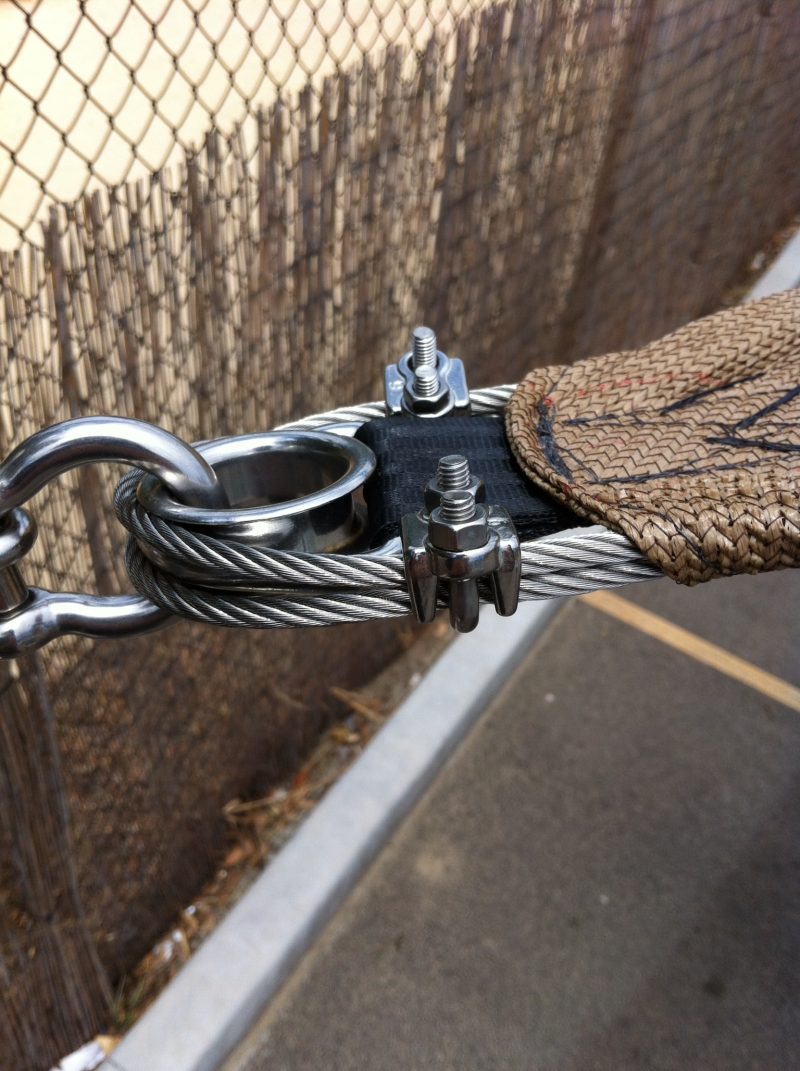
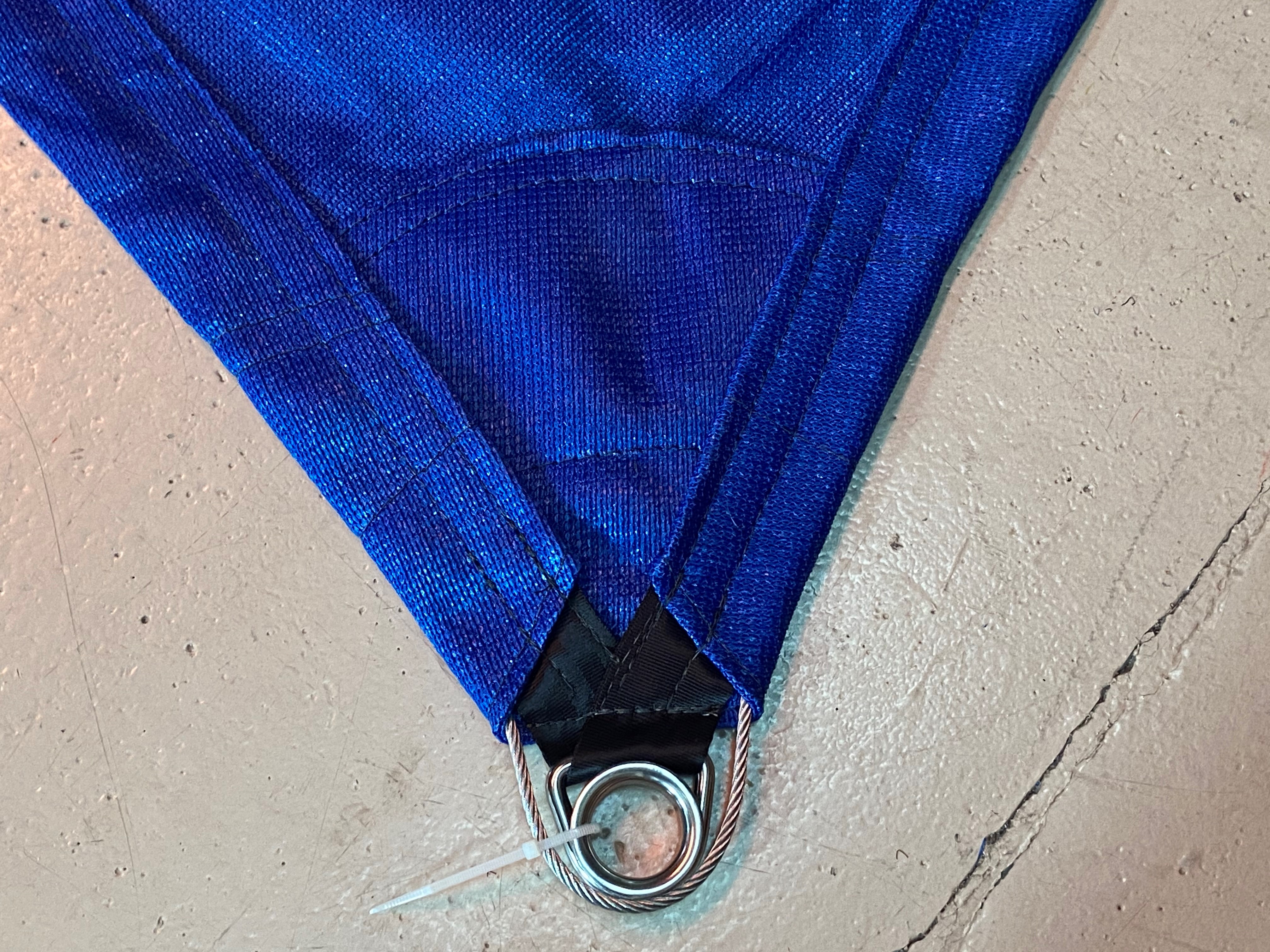
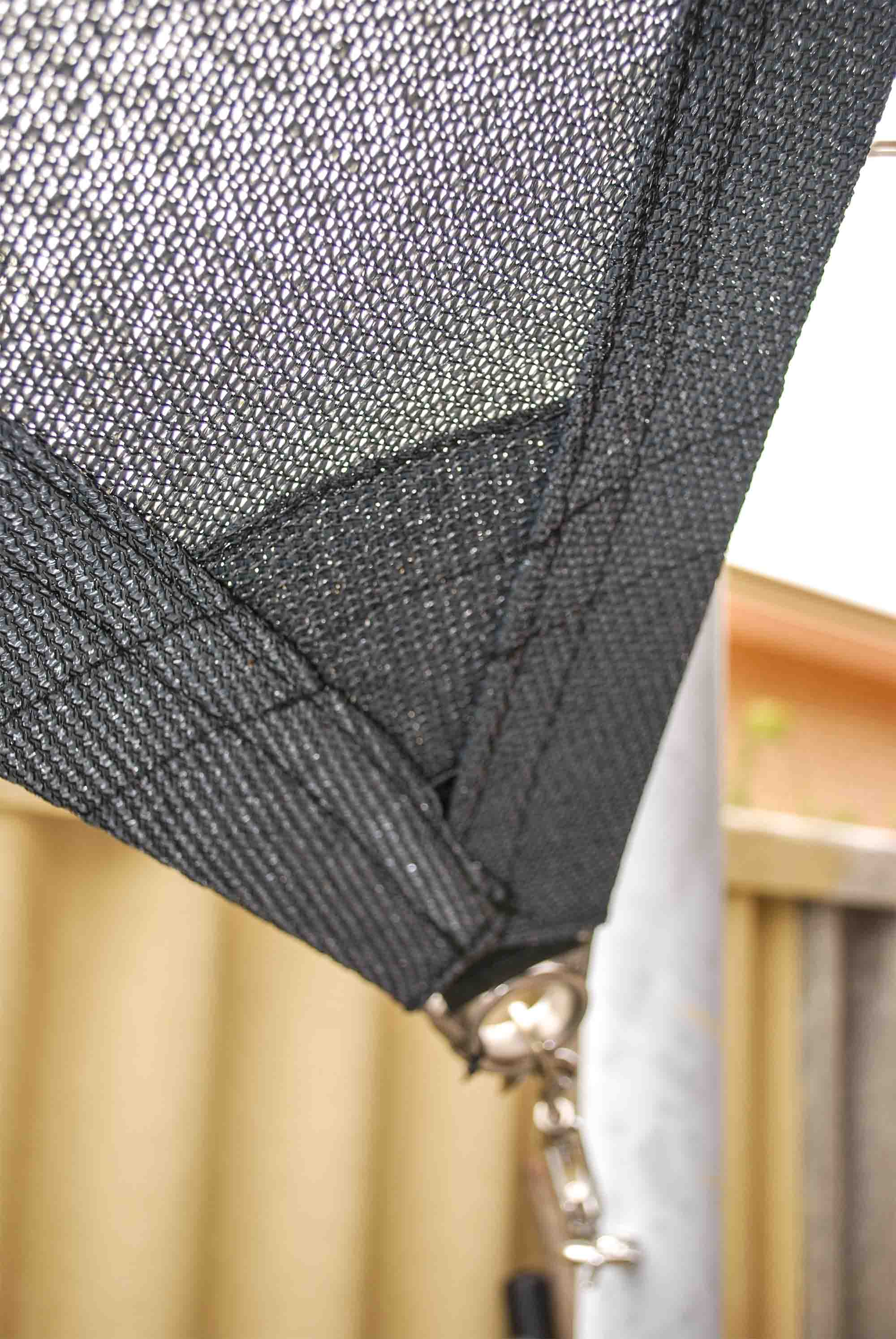
Layered webbing over a stainless thimble, with the perimeter wire rope through it. -
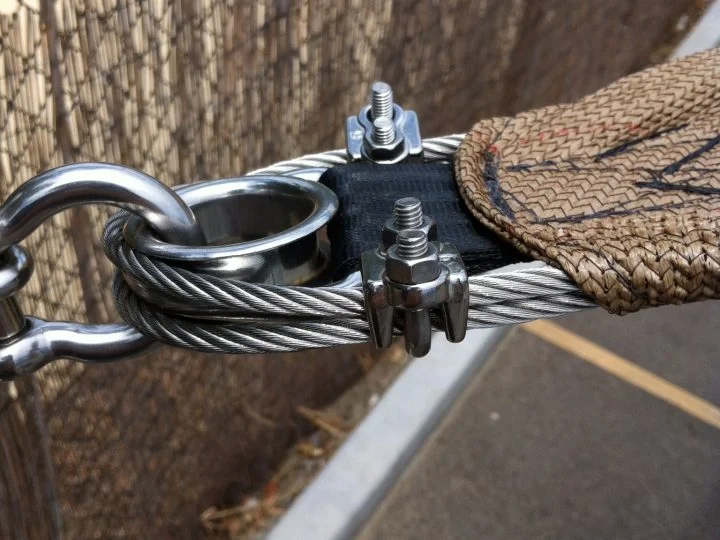
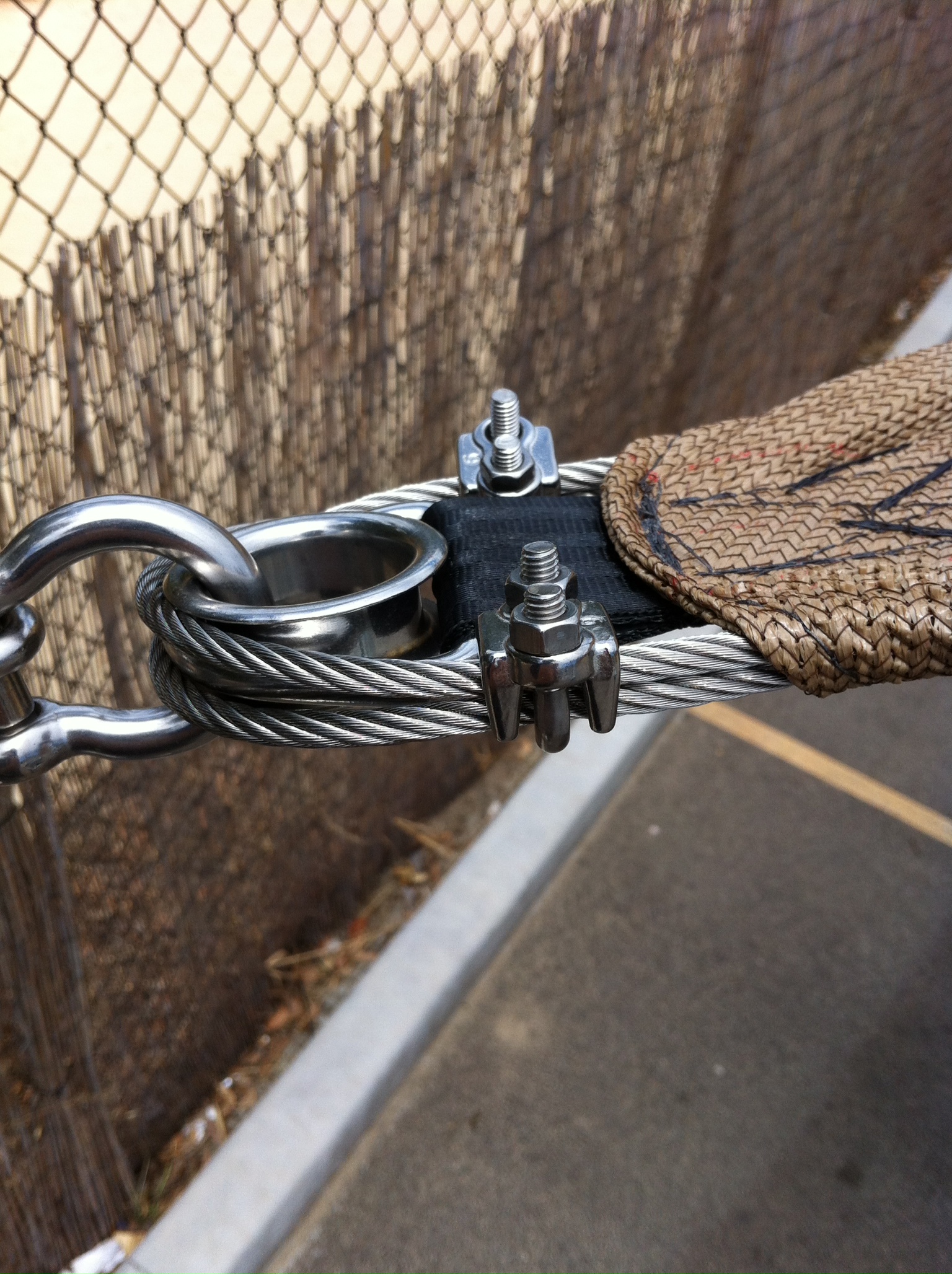
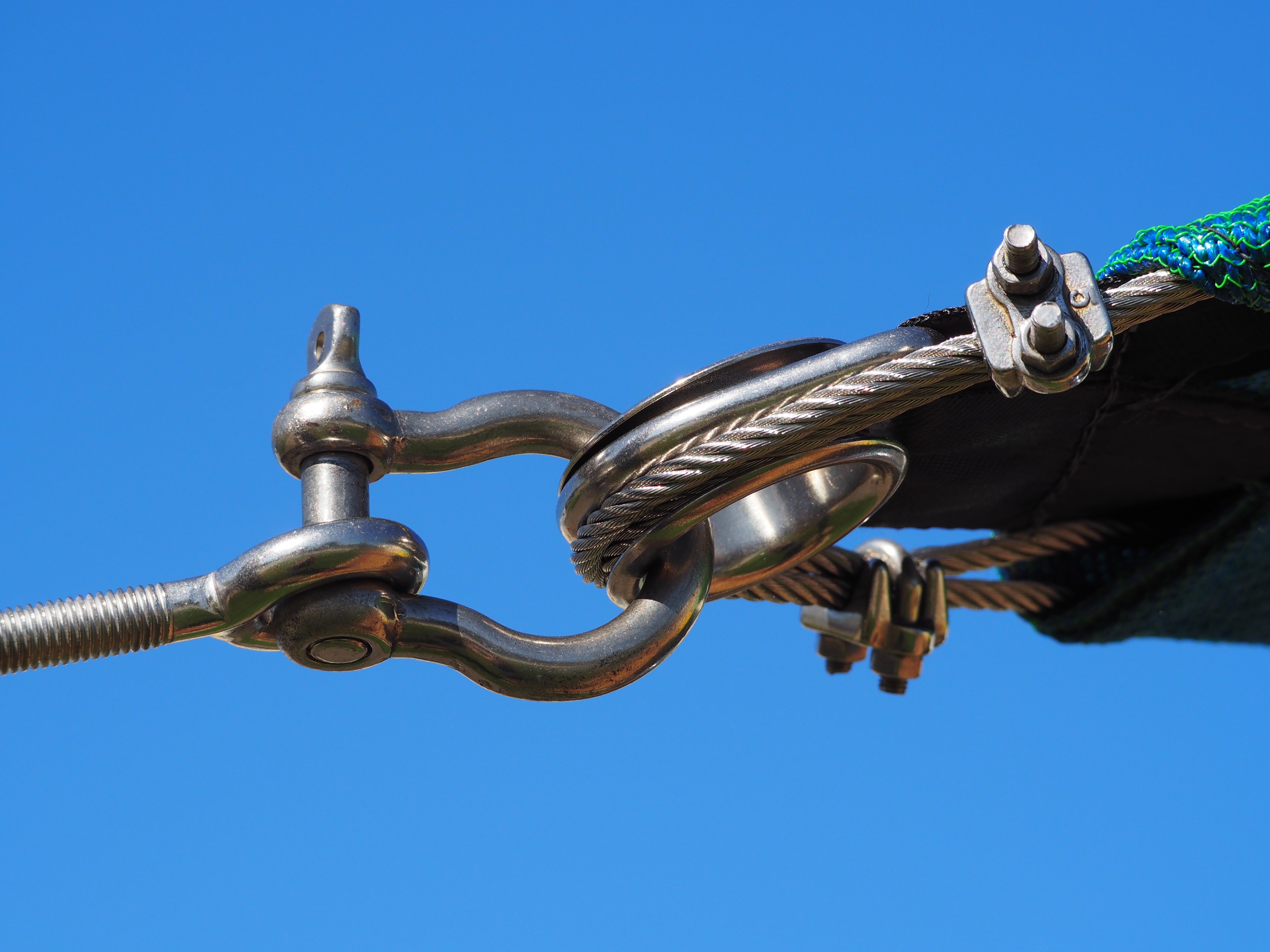
Thimble and wire rope grips where the perimeter cable meets the shackle. -
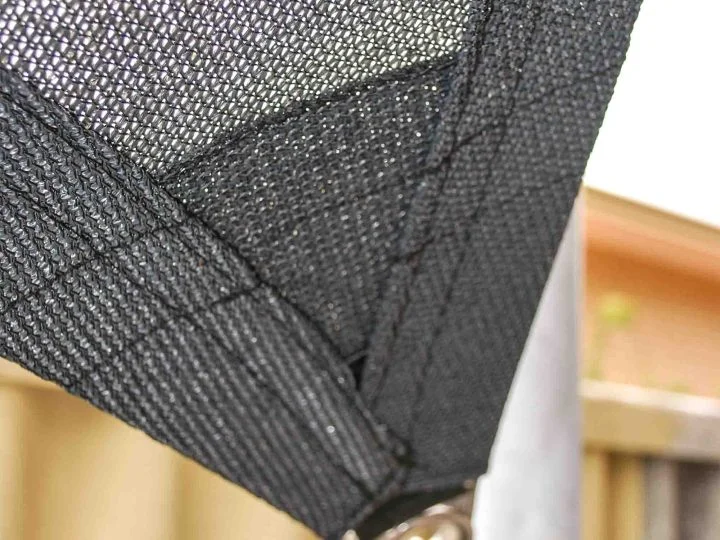
Reinforced corner webbing at a galvanised post. -
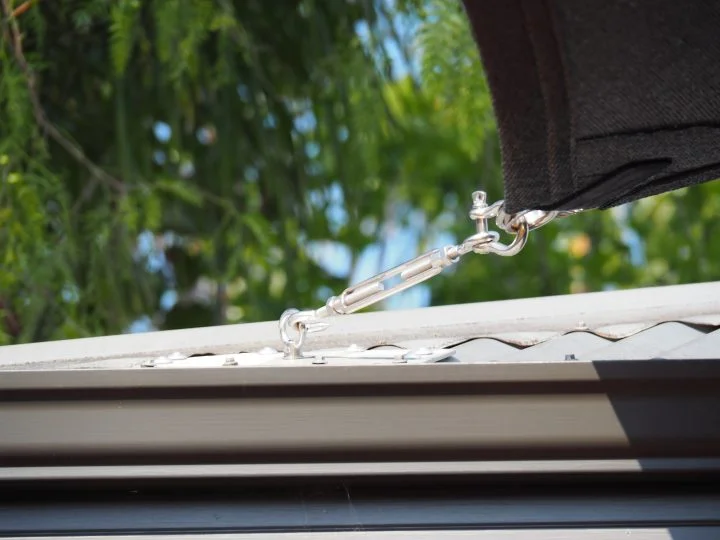
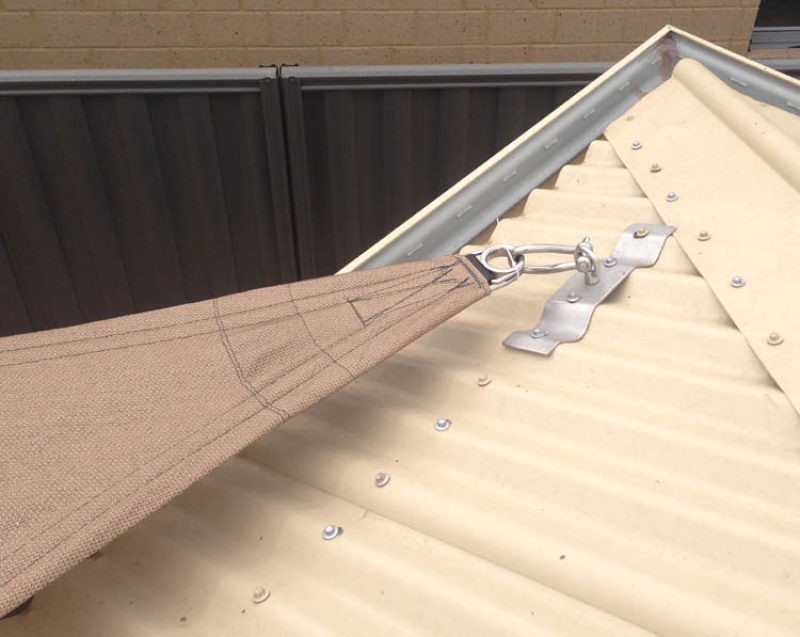
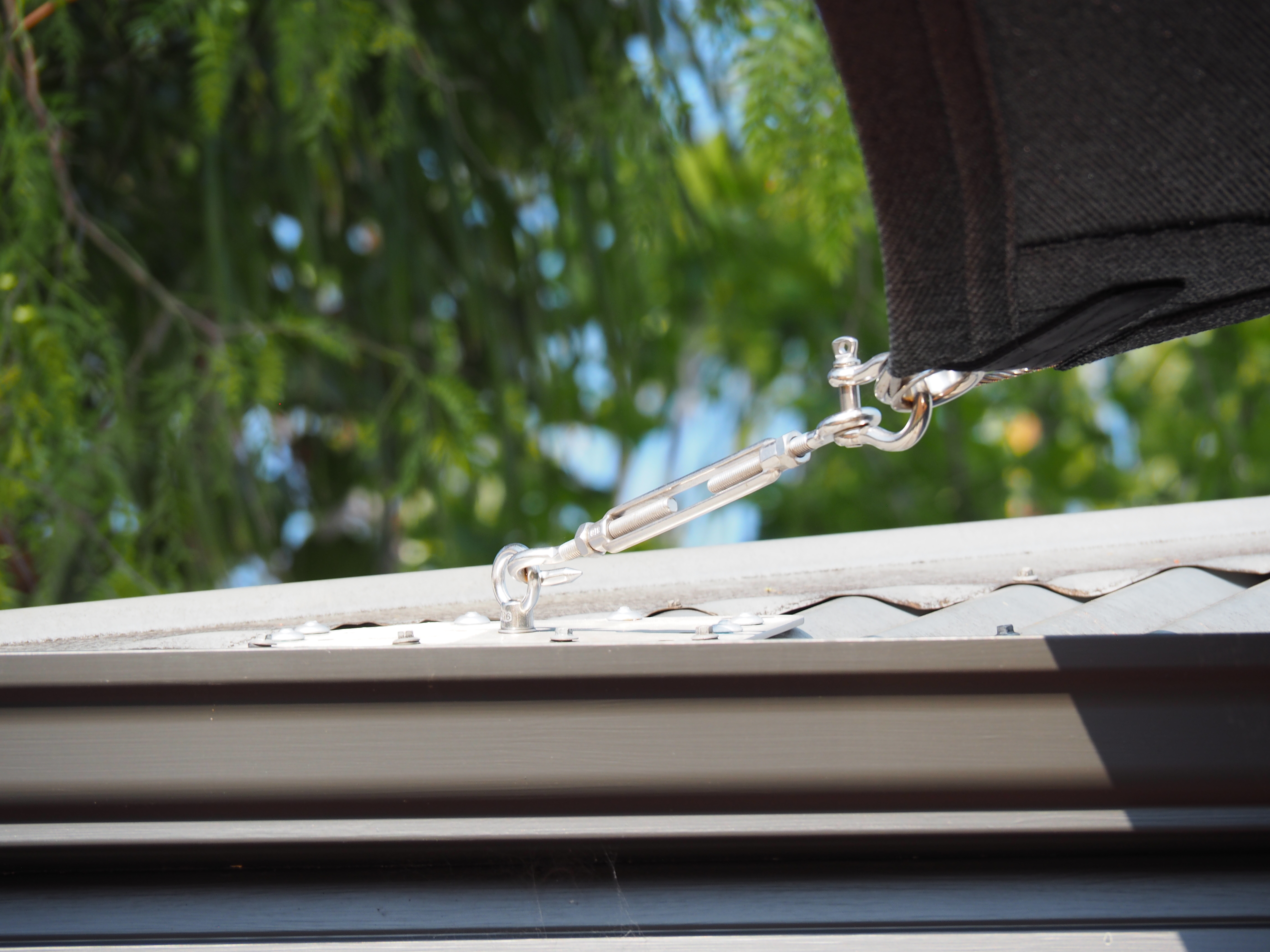
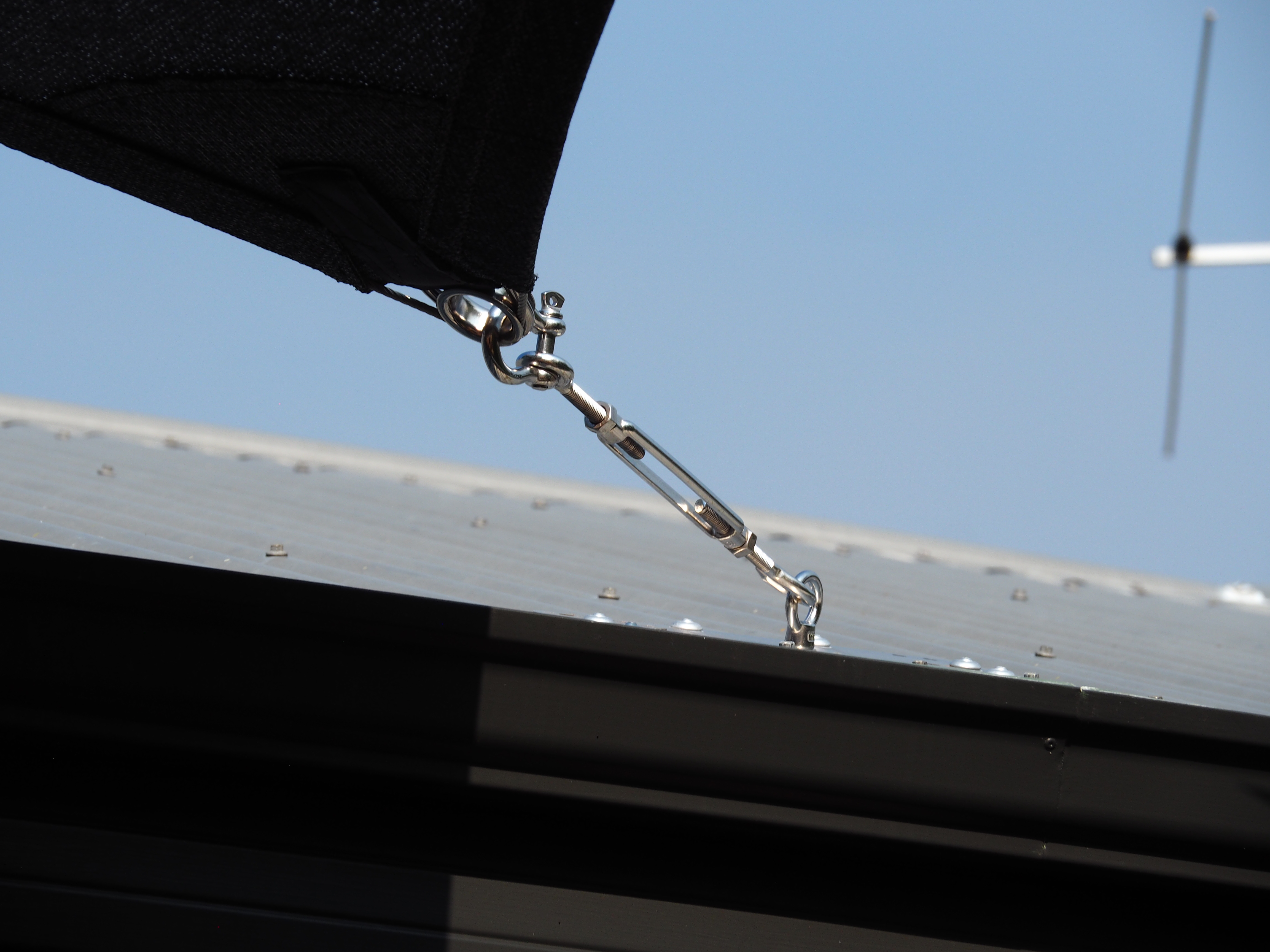
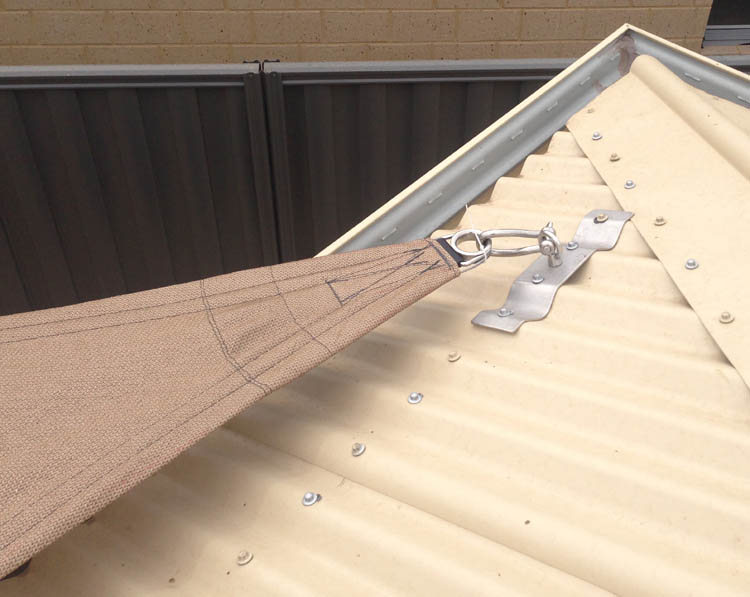
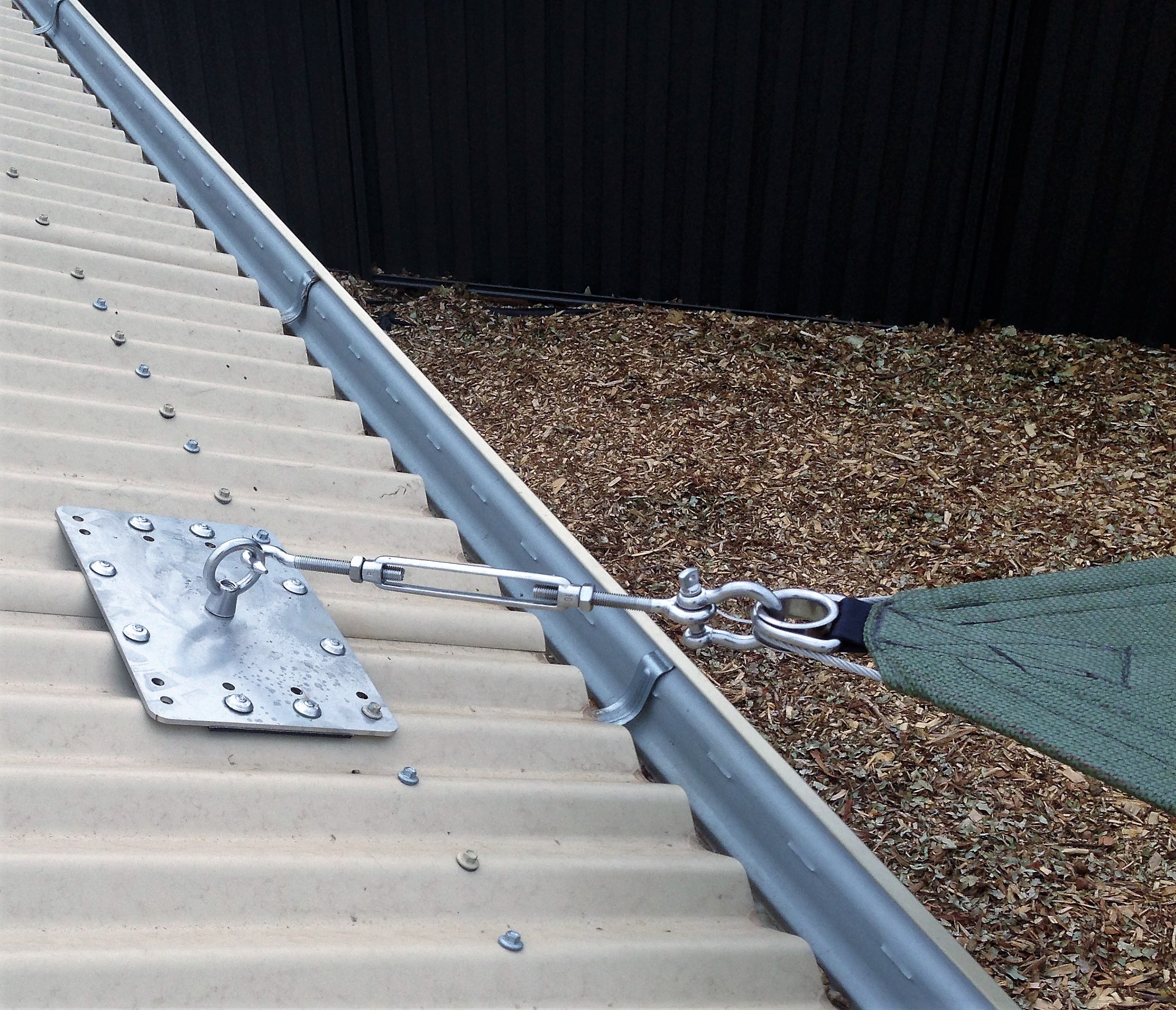
Turnbuckle down to a low plate on the roof sheeting. -
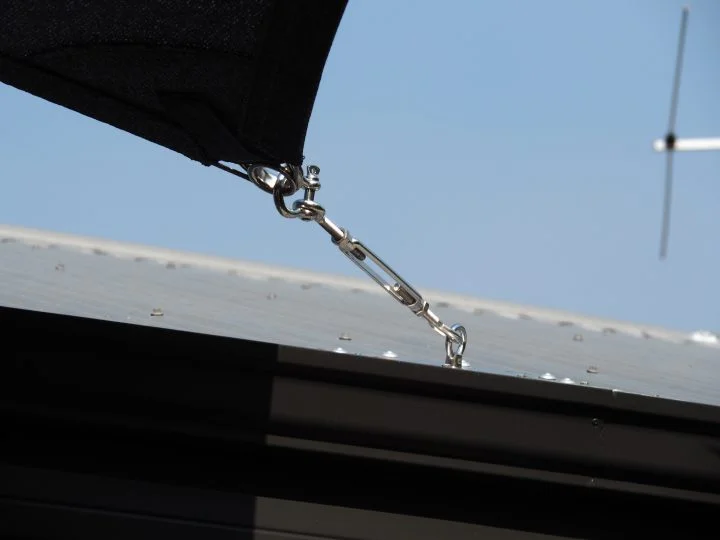
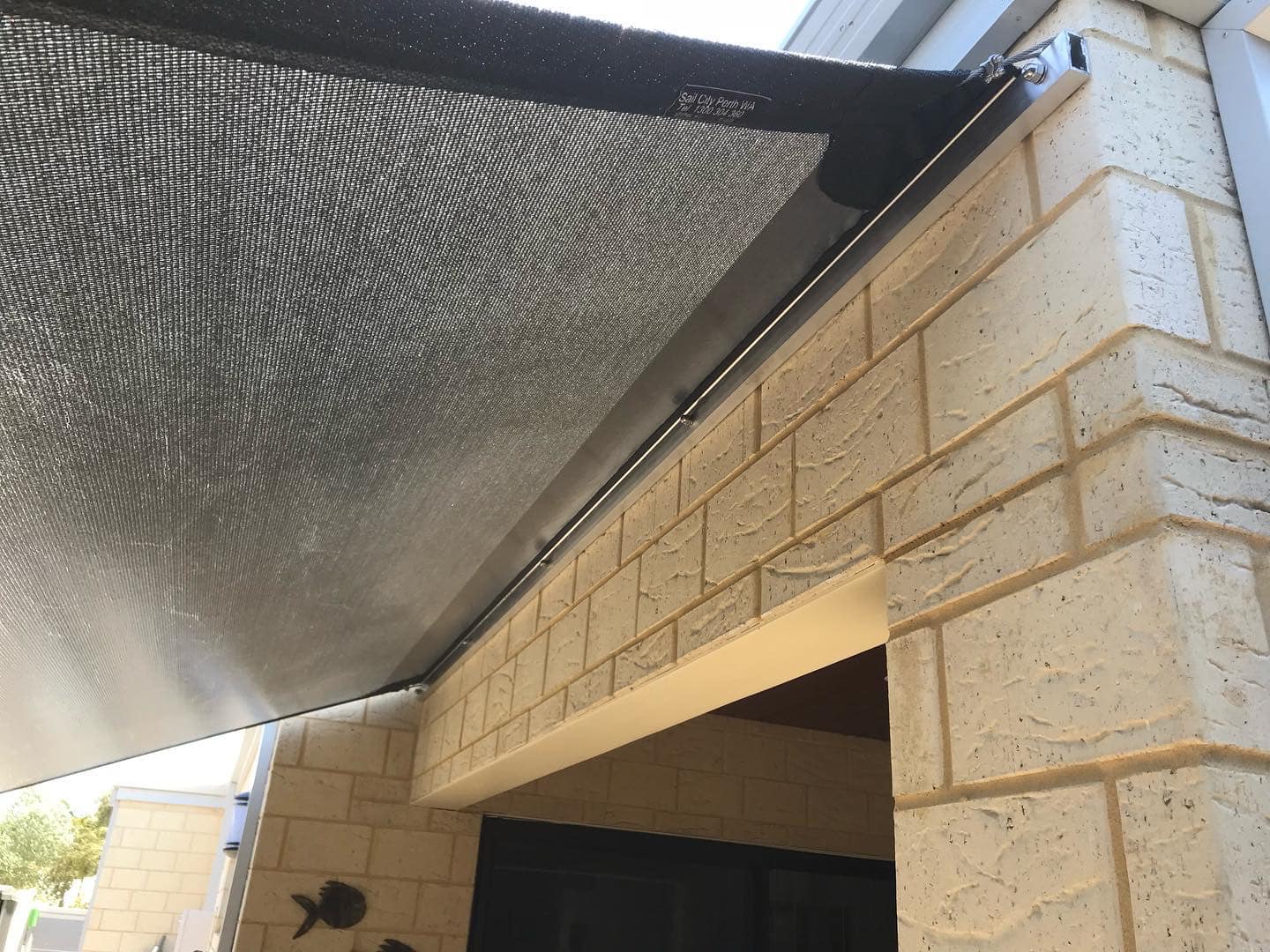
Kept tight to the roofline so it stays out of the view from the yard. -
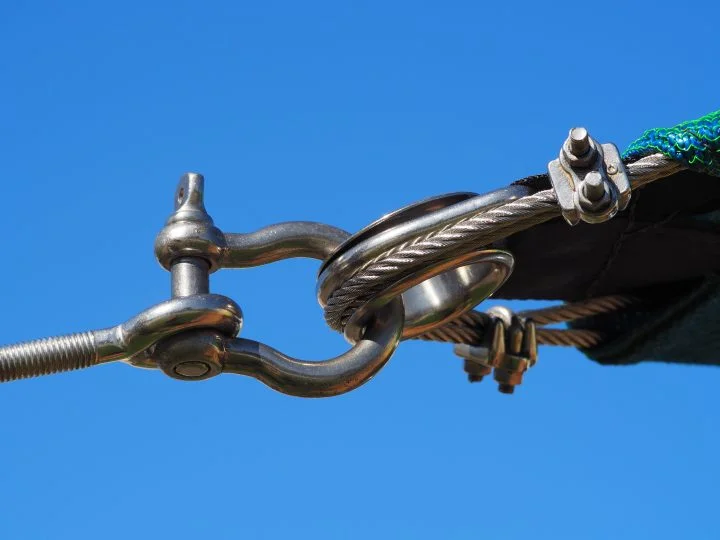
Dee shackle and turnbuckle joining the corner to the perimeter wire rope. -
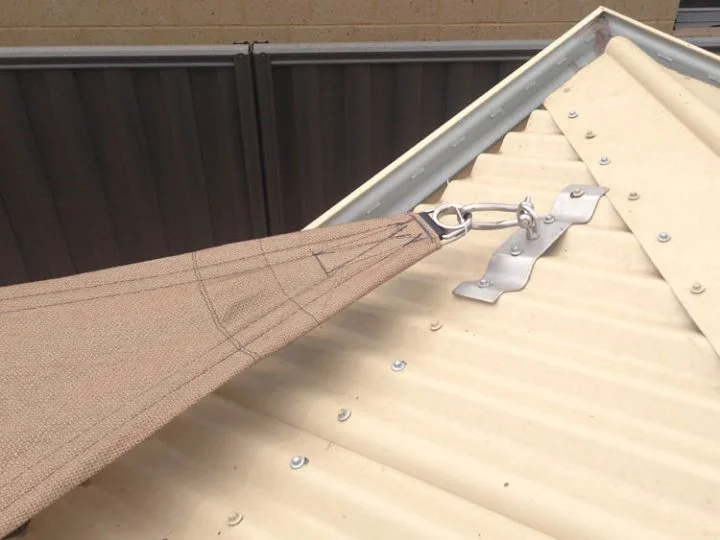
A roof plate shaped to the corrugation, spanning several ribs. -
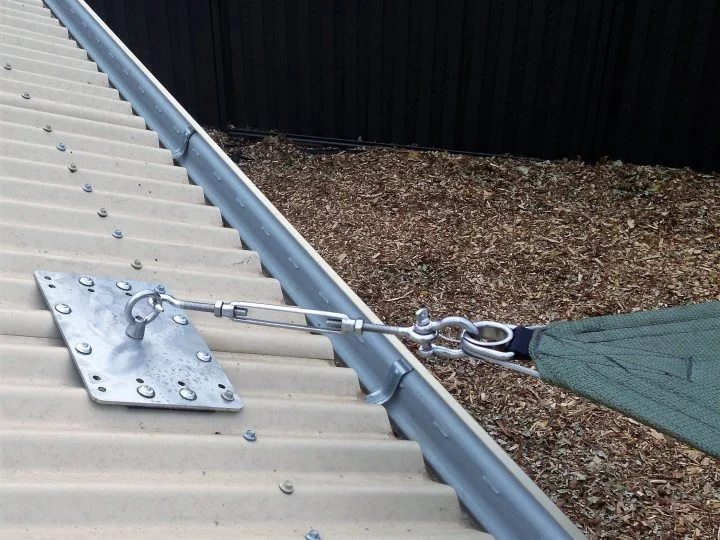
A bigger plate, set back clear of the gutter line. -
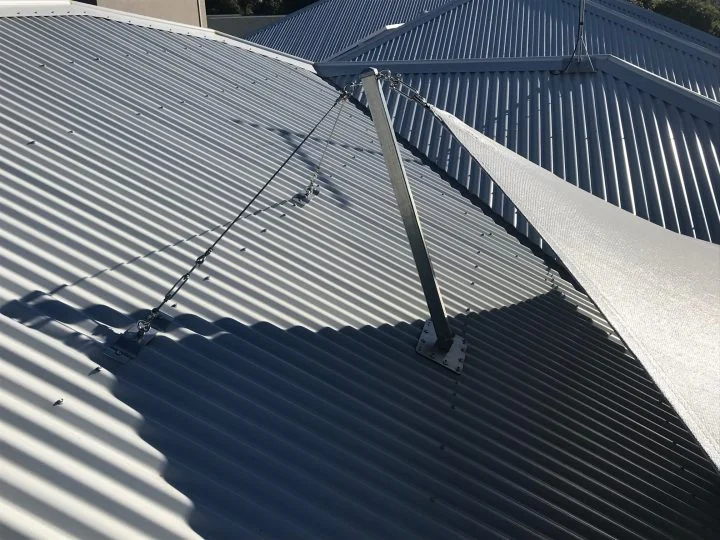
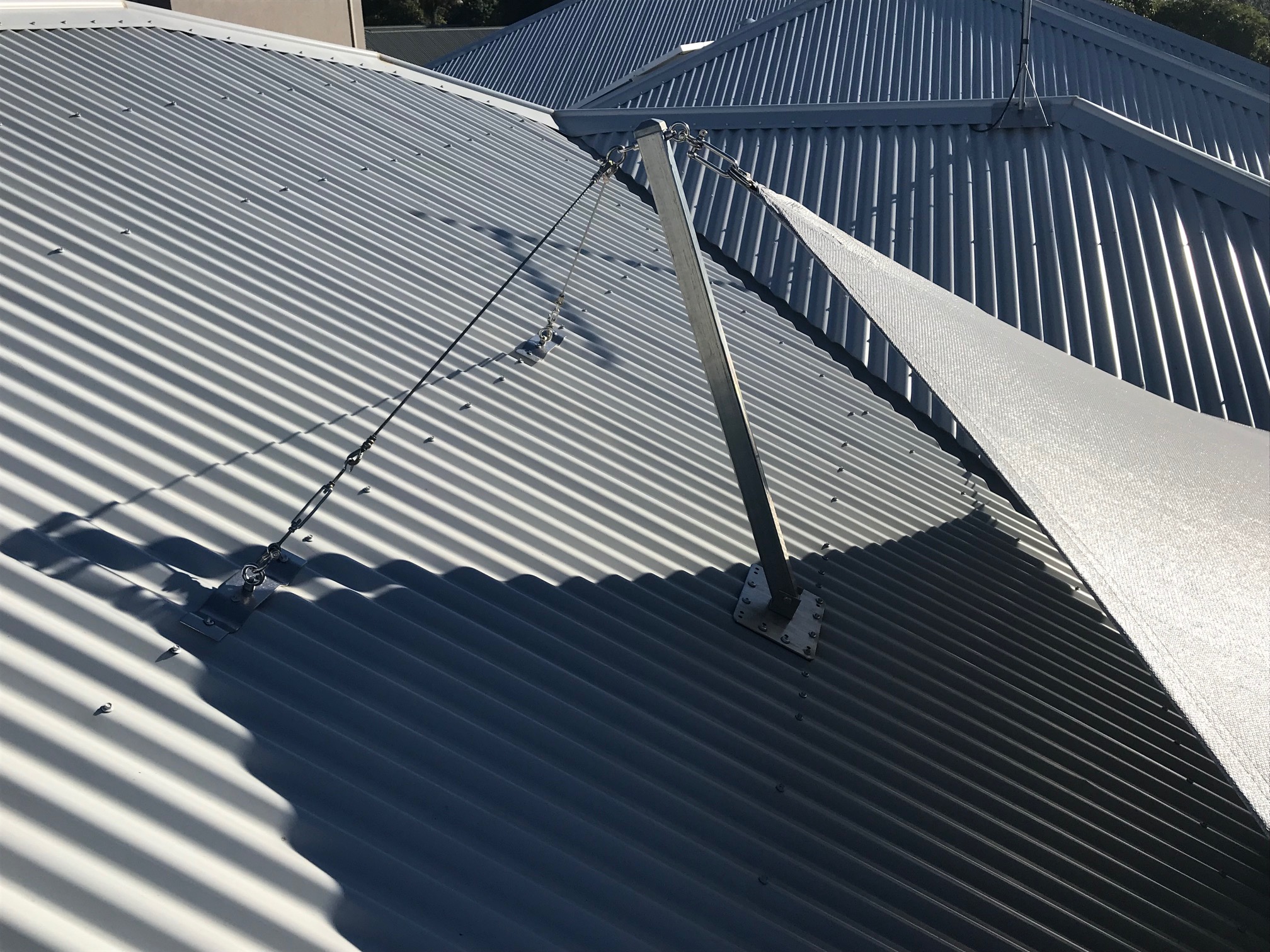
A post on a base plate, bolted through the roof and stayed back to the structure. -
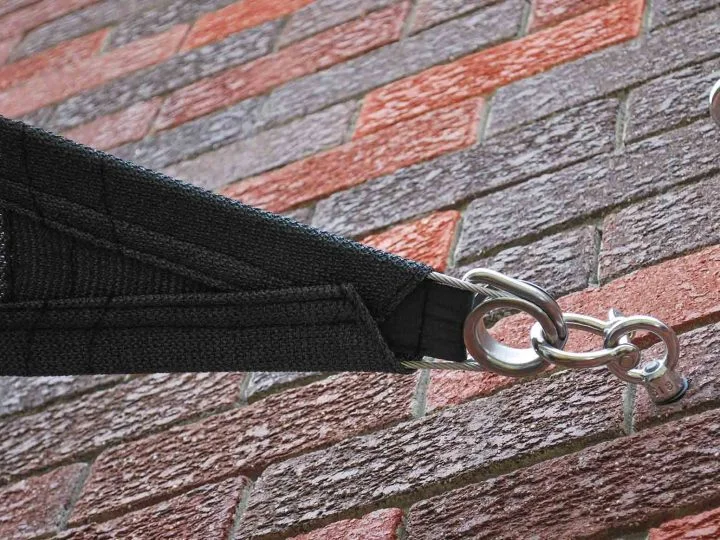
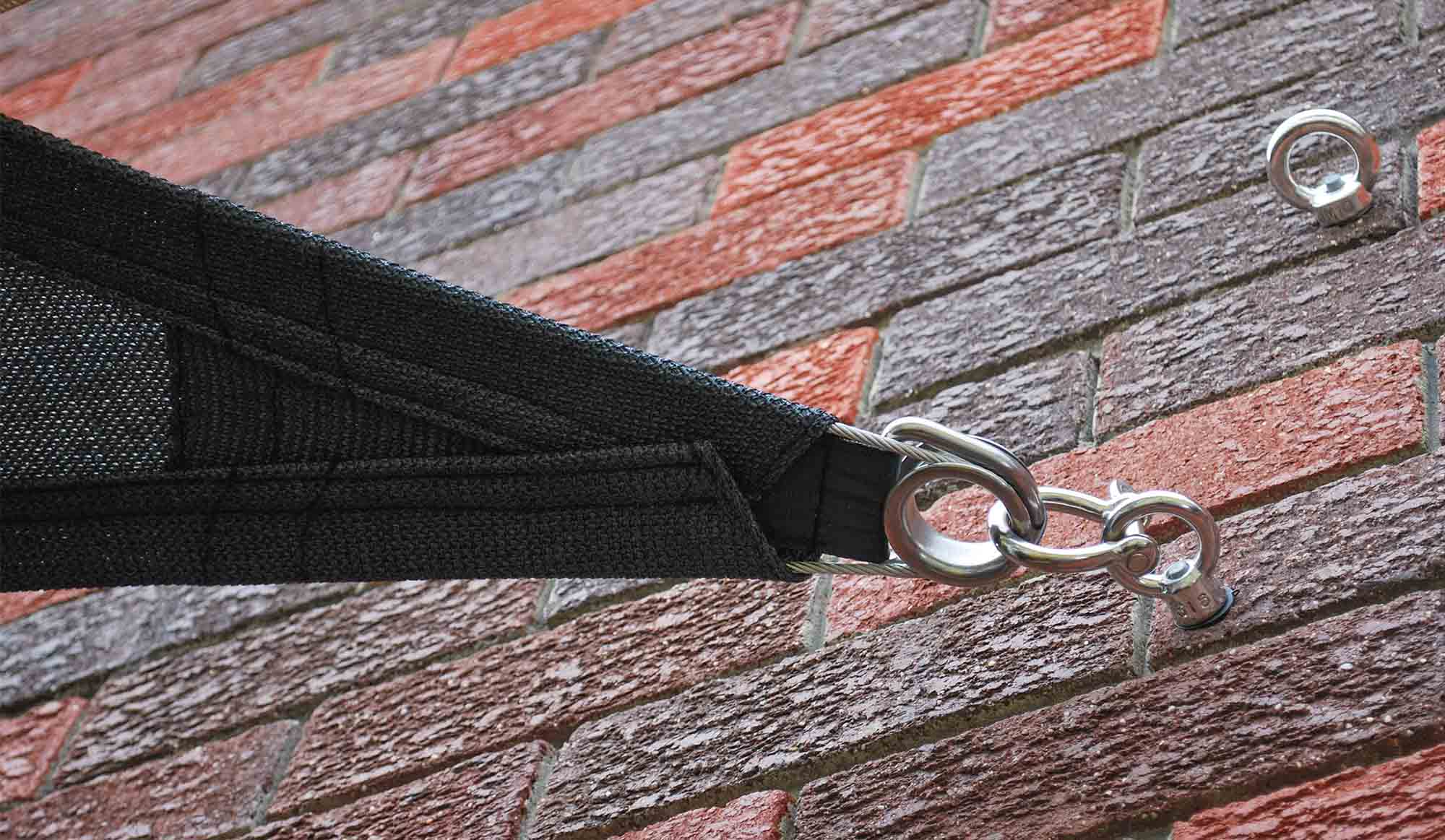
An eye bolt into the brickwork, with a ring and shackle to take the sail. -
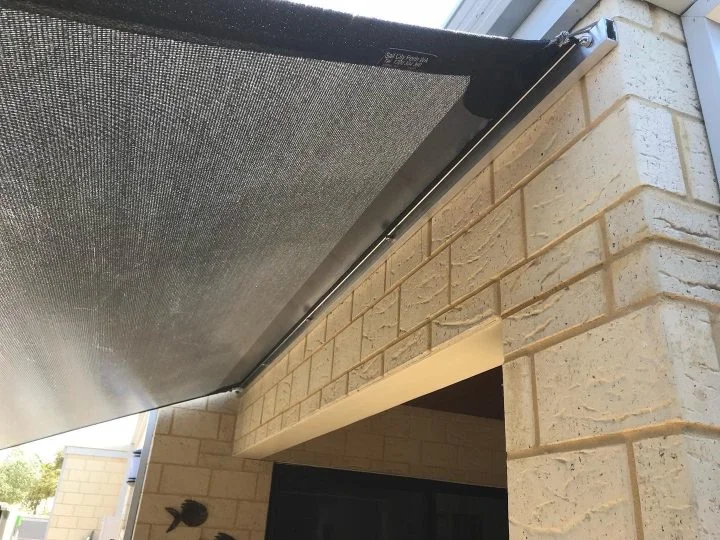
Wall track along the brickwork, closing the gap between sail and house.
What we fix to
The fixings we use most.
Most jobs use two or three of these. Which ones depends on what the house will carry and where the sail has to sit.
-
Roof plates
A plate shaped to the roof corrugation, spanning several ribs and fixed through to the structure below. The usual choice on Colorbond and zincalume.
-
Fascia and rafter brackets
Where the rafter ends can take the pull, a bracket fixes back into solid timber instead of hanging off the fascia board.
-
Wall fixings
Eye bolts, wall plates and pad eyes anchored into brick, double brick or limestone.
-
Posts
Where the house gives us nothing to pull against we stand our own galvanised post, either footed in concrete or base-plated and stayed back to the structure.
-
Wall track
A continuous track along the wall closes the gap between sail and house, so there is no strip of sun down the side.
-
Wire rope, shackles and turnbuckles
The perimeter cable and the fittings that join it to the fixing point: thimbles, grips, dee shackles and turnbuckles.
Reference
The parts and fittings catalogue.
Our hardware range with sizes and prices throughout. Plenty of it we sell over the counter. If you are after something that is not listed, ask us.
-
Parts & Fittings Catalogue
The same 316 stainless hardware and hand-finished fittings we install ourselves — bolts and rods, brackets and plates, shackles and swivels, wire rope, turnbuckles and fasteners, with sizes and prices throughout.

Residential enquiries
Tell us what you are shading.
Send us a few details and we will come out for a free measure and quote. The fixings get sorted once we can see what we are working with.